God is our Guide                 Number 1 site for helping reverse diseases on Planet Earth
cidpUSA Foundation

 cidpusa.org   


      Home
      Diagnosis
      Treatment
      Pathology
      Variants
      CIDP info
      Fibromyalgia
      IVIG
      Diet anti-inflammatory
      Burning  Feet Home
      Services Page
      Chronic Fatigue
      Autoimmune diseases
      Prognosis
      Bible healing
      Celiac disease
Prolotherapy

Blood injection theray

silver fillings

What is autoimmune

Toxic Baby products

Infants  and women omega-3

 Selenium

Basil

Bay leaves

Eliminate insulin implants

Sugar treatment

Heart FAILURE

Irregular periods

Myasthenia diet

Prophets

cancer survivor

Tomato as a medicine

New Vaccine
  Natural Makeup
  Neck Pain
  Ocular Female diseases
  Chronic fatigue syndrome
  Osteoporosis
  Women Heart Attacks
  Breast Size & Disease
  Female Sex Disease
  PARKINSON
  Memory problems
  Breast Lymph Drainage
  Kidney stone Buster
 Bras cause breast cancer
  Skin repair Clinic
 Pandas
  Hepatitis

Risk of heart disease & stroke 

Depression and breast cancer

Kidney stone removal 

Alopecia general

Personality

Skin hair nail spa

Memory clinic

Depression & anxiety

Addiction  & Drug Rehab

Sexual  disorders Clinic

Parkinson Clinic

Epilepsy Clinic

Pain Clinic

Bone disorders clinic

Joint disorder clinic

Neurology Clinic

TMJ Clinic

Reduce  your weight

Antibiotics

 Vitiligo

DHEA and cognitive functions

Parkinson

Diabetise-2

Body goes against the grain

Anemia and celiac disease

 Joint Disorders

  Guide on treatment of autoimmune disease please read our e-book 


 If you have been advised joint replacement , Try to help yourself without surgery to improve your joints.

Osteoarthritis is also known as a degenerative joint disease, or osteoarthritis, is one of the most common forms of arthritis. It occurs when the cartilage located within your joints breaks down over time and can sideline a bodybuilder’s or athlete’s career for good. Remember after surgery you can get other medical problems from anesthesia and inflammation. Reduce pain by reducing inflammation take care of pain and joint disease without any surgery.  Osteoarthritis is a inflammation and that can be managed by proper diet and supplements first read our diet section for self help. Simply eating cherries will help many people who are suffering from joint inflmmation.


 Treatment of Knees, hips, spine and back problems, neck shoulder problems. Feel better from day one.

A joint that has been replaced will again need replacement in 7-10 years.

We use alternative medicines and herbal methods along with prolotherapy, magnetic stimulation to improve mobility and reduce joint disease.


Facet joint disorders and back pain

Anatomy of facet joints
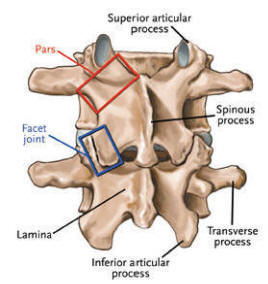

Nearly every flexible or movable level of the spine (with the exception of the very top vertebra) is comprised of the same elements, including:
        • Vertebral body-the bony building blocks of the spine
        • Facet joint-small stabilizing joints located between and behind adjacent vertebrae
        • Intervertebral disc-which provides a cushion between each of the vertebral bodies and binds them together
  •  CIDPUSA offers non surgical management for above injuries any where in the world in any city, Recovery in a month, cost effective treatment. Contact us by selecting a plan from the services section of cidpusa.org

Other than supporting the organs of the entire body, the axial (midline) skeleton’s discs allow rhythmic motions required by humans to walk, run, swim, and perform other regular movements. Additionally, the spine (so named from the bony plates that extend backwards from the vertebrae) provides a bony protection for the spinal cord and emerging nerves.

To prevent excessive motion, over-twisting or toppling over, the segments of the spine are stabilized by a number of structures that nonetheless preserve the flexibility needed to turn, look around and get around. The facet joints, or joints with “small faces” are found at every spinal level (except at the top level) and provide about 20% of the torsional (twisting) stability in the neck and low back. The vertebrae of the chest area are normally far less mobile and permit a small amount of forward/backward and some side bending, and very little twisting.

In the low back, forward-backward bending is limited to about 12 degrees and lateral (to the side) bending to about 5 degrees. Lower back rotation is limited to only about 2 degrees per segment, since excessive rotation could lead to spinal cord or nerve damage.

At each given spinal level the angle of the facets - relative to a plane running through the body from front to back - varies from more parallel to more perpendicular. Each facet joint is positioned at each level to provide the needed limits to motion, especially to rotation and to prevent forward slipping (spondylolisthesis) of that vertebra over the one below.

Each upper half of the paired facet joints are attached on both sides on the backside of each vertebra, near its side limits, then extend downward. These faces project forward or towards the side. The other halves of the joints arise on the vertebra below then project upwards, facing backward or towards the midline to engage the downward faces of the upper facet halves.

The facet joints do slide on each other and both sliding surfaces are normally coated by a very low friction, moist cartilage. A small sack or capsule surrounds each facet joint and provides a sticky lubricant for the joint. Each sack has a rich supply of tiny nerve fibers that provide a warning when irritated.

The intervertebral discs are also a type of joint in the spine, and are bound together by flexible fibers in several circling bands, like a tough fire hose, that make up the outer portion of the disc. Disc joints can bend and rotate a bit but do not slide as do most body joints.

Facet joint problems –

back pain from bone spurs and osteoarthritis


Facet joints are in almost constant motion with the spine and quite commonly simply wear out or become degenerated in many patients. When facet joints become worn or torn the cartilage may become thin or disappear and there may be a reaction of the bone of the joint underneath producing overgrowth of bone spurs and an enlargement of the joints. The joint is then said to have arthritic (literally, joint inflammation-degeneration) changes, or osteoarthritis, that can produce considerable back pain on motion. This condition may also be referred to as “facet joint disease” or “facet joint syndrome”.

A protective reflex arrangement arises when the facets are inflamed which causes the nearby muscles that parallel the spine to go into spasm. We therefore see inflamed facets causing crooking and out-of posture of the back, along with powerful muscle spasm. Manually ‘correcting’ this spinal curvature actually depends on relaxing the spastic muscles and not a rearrangement of bony structures.


IgG

IgA 

Immune dysfunction

IgG subclass deficiency 

Immunodeficiency

 Immune deficiency

IgA nepropathy

911 CIDP story

Tetanus Vaccine Story

Stem Cell Story

Surgery CIDP

Cranial nerve CIDP

Farmer CIDP

Recurrent attack CIDP

Charcot

Car accident & CIDP

Arthritis & CIDP

Flu Shot Story

MS & CIDP story

Story21new

Renal transplant PRA

Neck Pain Tips

 Quran page