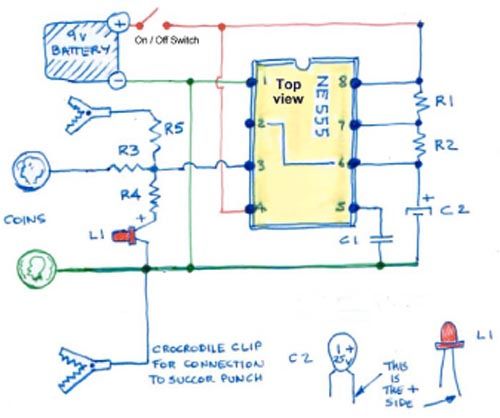
Electrical Stimulation Therapy
If 110 volts of electrical current is given to any human
they will die instantly. A human can never become
sensitized to electricity. Similarly a few milliamps of
electricity will kill all Aids, Ebola, Dengue, TB or any
other micro-organism. The bugs can never become resistant to
electrical current.
D.C current is more deadly then AC. Only 50 volts
of DC current can Kill a human , so a few milliamps of
9-15 volt DC current will kill all or any bug in the
body in 15 minutes. If you repeat this daily you will
become resistant to any superbug in the world. All
Russian astronauts use this device. To read how we have
used this device please read the Lahore page and read
the patients case reports.
CIDPUSA has tested this with a simple
Tens unit and it works like magic. Allergies are gone,
immune deficiency reverses, hair grow up , infertility
is turned to fertility and infections are easily healed.
This whole research has been put in our e-book.
One more
interesting fact was that PTSD , drug addiction, sexual
addiction was easily reversed at home with these units
and they also helped in food poisoning, snake poisoning.
If you used a unit you will not get food poisoning
even though the food may be toxic enough to kill others.
This is what you find in our e-book. Years of vaginal
infections easily reversed in 30 minutes of treatment,
dermatomyositis reversed, heart diseases and cancers
disappear. All this from a simple tens unit.
Below is some history of electro treatment.
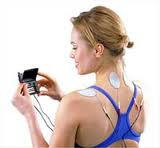
The history and
origin of electrostimulation, also commonly referred to
as electrotherapy, is unique. The therapeutic benefits
of electricity were not discovered in a laboratory or
clinic and were not a byproduct of someone's
accidentally coming into contact with a bolt of
lightening. In fact, electrotherapy originates as early
as 400 BC from contact with the torpedo fish, which
could produce electric shocks between 100 and 150 volts.
Taken live from lakes and streams and placed on a
painful area of the body, the torpedo fish produced a
series of electric shocks that reduced and controlled
pain.
In the mid 1700s the development of the Leyden Jar,
which is a predecessor to the battery, provided the
capacity to store electricity. As a result, physicians
had more control over where, when, and how much current
could be applied for therapeutic use. The advancement of
the battery in the 1800s further developed
electrotherapy, and in the latter half of the nineteenth
century most physicians in America possessed at least
one electrical stimulator. However, as with any new
medical technology, electrotherapy was not readily
accepted. This skepticism resulted in a decline of
interest in electrotherapy toward the end of the
[nineteenth] century (eMedicine Clinical Knowledge Base,
1996).
In 1965 electrotherapy regained its popularity when
the gate control theory of pain was introduced. This
theory proposed that pain perception depends on the
balance of large- and small-diameter nerve fiber
activity and that an increase in large nerve fiber
activity can potentially "close the gate" to information
going to the brain from small pain fibers. When the gate
is closed, the transmission of pain signals to the brain
is blocked.
Clinical evidence came in 1967 by Wall and Sweet, who
reported that electrical nerve stimulation provided
successful relief of chronic pain. Initially, electrodes
had to be surgically implanted but it was discovered
that current could be sent directly through the skin,
eliminating the need for surgery. This therapeutic
effectiveness in pain relief has led to other
applications of electrotherapy by rehabilitative
clinicians, including treating injured or diseased
muscle and other soft-tissue conditions (Gersh, 1992).
This course reviews cell physiology and the response
of muscle fibers to electrical stimulation, and presents
the principles of electrical stimulation to aid the
healthcare professional in decisions regarding
indications and clinical applications.
THE PHYSIOLOGY UNDERLYING ELECTROSTIMULATION
Excitable Cell Membranes
The major therapeutic uses of electricity derive from
muscle contractions or sensory stimulation or a
combination of both, so it is important to review the
general physiological effects of electricity on nerve
and muscle tissues. Nerves and muscles are both
excitable tissues, and this
excitability is dependent on permeability of
the cell membrane. The nerve or muscle-cell membrane
regulates the interchange of substances from inside and
outside the cells.
This cell permeability is voltage-sensitive,
producing an unequal distribution of charged ions on
either side of the cell membrane, which in turn creates
a difference in electrical charge between the interior
and exterior of the cell. When this charge occurs, the
membrane is considered to be polarized. The potential
difference between the inside and outside charge is
known as the resting potential because
the cell tries to maintain this difference in electrical
charge as its normal
homeostatic environment.
There is a greater concentration of diffusible
positive ions outside the membrane than within it. The
cell continuously moves positively charged sodium from
inside to outside, and balances this by moving
negatively charged potassium to the inside through a
mechanism called active transport. A
higher concentration of potassium occurs inside the
cell, but the overall charge difference produces an
electrical gradient with positive charge outside and
negative charges inside (Gersh,1992).
THE PHYSICS OF ELECTROSTIMULATION
Alternating and Direct Current
Electrotherapeutic devices used in rehabilitation
generate two different types of current that, when
introduced into biological tissues, are capable of
producing specific physiologic changes. These two
current types are referred to as alternating and direct
current. In alternating current, the
electrons constantly change directions, reversing its
polarity. Electrons flowing in alternating current
always move from the negative to positive pole,
reversing direction when the polarities are reversed.
Conversely, direct current is a
unidirectional flow of electrons toward the positive
pole. However, on most modern direct-current devices,
the polarity and thus the direction of current flow can
be reversed. Electrotherapeutic devices are usually
further classified as being either high-voltage
generators or low-voltage generators. The high-voltage
devices produce waveforms (the visual representation of
the current or voltage) within an amplitude of 115 volts
and are greater and of relatively short duration (less
than 10
msec) (Gersh, 1992).
Pulsed Current
Pulsed current is the unidirectional or bidirectional
flow of charged particles that periodically stop for a
limited period of time before the next event. More
specifically, a
pulse is an isolated electrical event
separated by a finite period of time from the next
event. A constant current source is preferable to a
constant voltage source for most physiologic
applications (Gersh, 1992; Prentice, 2001).
Three types of current.
Galvanic Current
The terms galvanic current and
direct current are often used interchangeably.
Historically, the term galvanic has been used
to describe an uninterrupted direct-current form.
High-volt pulsed galvanic electrical stimulators are
considered to be useful in acute injuries associated
with major tissue trauma accompanied by bleeding or
swelling. Their direct current creates an electrical
field over the treated area that, theoretically, changes
blood flow.
Connected to two pads, galvanic stimulation uses a
positive pad that behaves like ice, causing reduced
circulation to the area under the pad and an associated
reduction in swelling, and a negative pad that behaves
like heat, causing increased circulation and reportedly
speeding healing (Gersh,1992).
Interference Current
Interference current is based on the summation of two
alternating-current signals of slightly different
frequency. This results in current having a recurring
modulation of amplitude, based on the difference in
frequency between the two signals.
TYPES OF ELECTRICAL STIMULATION
Iontophoresis
Iontophoresis, the process of
increasing the penetration of drugs into the skin by
application of an electric current, is commonly used by
physical therapists for the purpose of delivering
anti-inflammatory medications such as corticosteroids.
The groundwork for iontophoresis dates back to the early
1900s, with initial scientific experiments performed by
a researcher named LeDuc.
The majority of units consist of a compact
phoresor that operates with a 9-volt battery
and two wire leads, each connected to an electrode. One
electrode is the drug-delivery electrode intended for
the anti-inflammatory, and the other is used as a
dispersive electrode charged opposite to the
anti-inflammatory ion. When the electrodes contain
solutions of ions, negatively charged anions are
repelled from the cathode into the body and positively
charged cations are repelled into the targeted body area
from the anode.
This effect is specific for ions of the same polarity
as the electrode and, conversely, ions of the opposite
polarity are not transferred into the body. Physical
therapists use iontophoresis based on this penetration
and distribution of ions primarily for controlling and
reducing inflammation. This is applied while minimizing
the systemic concentration caused by circulatory removal
of the desired medication from the targeted area.
Two typical prerequisites for treatment with
iontophoresis are that the medication must be charged
(or modified to carry a charge) and that the
inflammatory process be near the body surface (i.e. a
superficial muscle or tendon rather than a deeper muscle
tendon bursa) (Costello, 1995).
The effectiveness of the ion transport system remains
controversial. For example, some researchers have
proposed that all the material delivered through the
skin with iontophoresis is removed by the subcutaneous
circulation and circulated around the body, providing
little if any local concentration to the intended
region. Conversely, other researchers have shown with
animal studies that ions and other substances do
penetrate and do provide local concentration.
In the physical therapy setting, constant direct
current has been commonly used in iontophoresis
applications. However because of concern over pH
changes, some researchers contend that a method of
producing a more "consistent" constant current should be
used to provide current while the skin resistance is
changing. Because of potential skin charge accumulation
and skin irritation due to pH changes, modulated
currents have been used with success on laboratory
animals. Pulsed currents have proved to be as effective
or more effective in the delivery of small ions. Such
studies indicate the need for physical therapists to
consider and investigate the use of currents other than
the traditional continuous monophasic current for
iontophoresis.
Corticosteroids are the principal drugs used with
iontophoresis in physical therapy because they have an
anti-inflammatory effect and are relatively inexpensive.
Dexamethasone is available in a somewhat more stable
dissolved form and is therefore often used with
iontophoresis. Some clinicians recommend treatments
using a current of 4 mA for 10 minutes. This current is
thought necessary to penetrate into the deeper tissues;
however, treatment times greater than 10 minutes are
less likely to achieve any greater tissue concentration
due to circulatory removal of the medication.
Still other clinicians propose a current of 2.0 mA
for 20 minutes for more superficial areas with a chronic
inflammatory condition. More recent advances in this
technology have introduced a disposable single-use
iontophoresis system with an internal battery and
current limiting circuitry. This method provides a
constant drug delivery for an 80 mA-minute treatment and
can deliver both negatively and positively charged drug
ions. It operates at a low current and is worn for 24
hours to deliver the desired dose. The unit is designed
to begin a treatment as soon as it is hydrated and
applied to the skin, and stop the treatment at
approximately 80 mA-minutes (Morris, 2003; Reena Rai,
2005).
Transcutaneous Electrical Nerve Stimulation (TENS)
Transcutaneous electrical nerve stimulation
(TENS) is one of the most commonly used forms
of electrostimulation for pain relief. Numerous clinical
reports exist regarding the use of TENS for conditions
such as low back pain, myofascial and arthritic pain,
neurogenic pain, and postsurgical pain. The method of
pain reduction produced by TENS is explained by the gate
control theory proposed by Melzack and Wall in 1965. The
"gate" between the level of the spinal cord and the pain
centers of the brain usually is closed, thereby
inhibiting constant nociceptive transmission by way of C
fibers from the periphery to the T cell.
A TENS unit consists of one or more electric signal
generators, a battery, and a set of electrodes. The
units are small and programmable, and the generators can
deliver uninterrupted forms of stimuli with variable
current strengths, pulse rates, and pulse widths. The
preferred waveform is biphasic, which helps avoid the
electrolytic and iontophoretic effects of a
unidirectional current. A variety of newer
transcutaneous or percutaneous electrical stimulation
modalities are emerging as technology advances (Jarzem,
2005).
please
go to page -2
Jeffrey Larson, PT, ATC