When the weather's cold, a big pot of soup simmering on the stove warms the heart as well as the hearth. Adding some whole grain barley to the pot will improve your health along with the flavor of whatever soup or stew you're cooking. In addition to its robust flavor, barley's claim to nutritional fame is based on its being a very good source of fiber and selenium, and a good source of phosphorus, copper and manganese.
Barley's Fiber for Regularity, Lower Cholesterol, & Intestinal Protection
Wish you were more regular? Let barley give your intestinal health a boost. In addition to providing bulk and decreasing the transit time of fecal matter, thus decreasing the risk of colon cancer and hemorrhoids, barley's dietary fiber also provides food for the "friendly" bacteria in the large intestine. When these helpful bacteria ferment barley's insoluble fiber, they produce a short-chain fatty acid called butyric acid, which serves as the primary fuel for the cells of the large intestine and helps maintain a healthy colon. These helpful bacteria also create two other short-chain fatty acids, propionic and acetic acid, which are used as fuel by the cells of the liver and muscles.
The propionic acid produced from barley's insoluble fiber may also be partly responsible for the cholesterol-lowering properties of fiber. In animal studies, propionic acid has been shown to inhibit HMG-CoA reductase, an enzyme involved in the production of cholesterol by the liver. By lowering the activity of this enzyme, propionic acid helps lower blood cholesterol levels.
In addition, barley's dietary fiber is high in beta glucan, which helps to lower cholesterol by binding to bile acids and removing them from the body via the feces. Bile acids are compounds used to digest fat that are manufactured by the liver from cholesterol. When they are excreted along with barley's fiber, the liver must manufacture new bile acids and uses up more cholesterol, thus lowering the amount of cholesterol in circulation. Soluble fiber may also reduce the amount of cholesterol manufactured by the liver.
Lastly, when barley provides insoluble fibers that feed friendly bacteria in the digestive tract, this helps to maintain larger populations of friendly bacteria. In addition to producing the helpful short-chain fatty acids described above, friendly bacteria play an important protective role by crowding out pathogenic (disease-causing) bacteria and preventing them from surviving in the intestinal tract.
Barley's fiber can prevent or help with a number of different conditions. For example, when barley's fiber binds to and removes cholesterol-containing bile, this can be very beneficial for people struggling with heart disease since it forces the body to make more bile by breaking down cholesterol, thus lowering cholesterol levels.
The fiber in barley can also help to prevent blood sugar levels from rising too high in people with diabetes.
Additional Protection Against Atherosclerosis
Yet another reason to increase your intake of barley is that, in addition to its fiber, barley is also a good source of niacin, a B vitamin that provides numerous protective actions against cardiovascular risk factors. Niacin can help reduce total cholesterol and lipoprotein (a) levels. (Lipoprotein (a) or Lp(a) is a molecule composed of protein and fat that is found in blood plasma and is very similar to LDL cholesterol, but is even more dangerous as it has an additional molecule of adhesive protein called apolioprotein (a), which renders Lp(a) more capable of attaching to blood vessel walls.)
Niacin may also help prevent free radicals from oxidizing LDL, which only becomes potentially harmful to blood vessel walls after oxidation. Lastly, niacin can help reduce platelet aggregation, the clumping together of platelets that can result in the formation of blood clots. One cup of barley will supply you with 14.2% of the daily value for niacin.
Significant Cardiovascular Benefits for Postmenopausal Women
Eating a serving of whole grains, such as barley, at least 6 times each week is a good idea, especially for postmenopausal women with high cholesterol, high blood pressure or other signs of cardiovascular disease (CVD).
A 3-year prospective study of over 220 postmenopausal women with CVD, published in the American Heart Journal, shows that those eating at least 6 servings of whole grains each week experienced both:
- Slowed progression of atherosclerosis, the build-up of plaque that narrows the vessels through which blood flows, and
- Less progression in stenosis, the narrowing of the diameter of arterial passageways.
The women's intake of fiber from fruits, vegetables and refined grains was not associated with a lessening in CVD progression.
Barley and Other Whole Grains Substantially Lower Risk of Type 2 Diabetes
Barley and other whole grains are a rich source of magnesium, a mineral that acts as a co-factor for more than 300 enzymes, including enzymes involved in the body's use of glucose and insulin secretion.
The FDA permits foods that contain at least 51% whole grains by weight (and are also low in fat, saturated fat, and cholesterol) to display a health claim stating consumption is linked to lower risk of heart disease and certain cancers. Now, research suggests regular consumption of whole grains also reduces risk of type 2 diabetes. (van Dam RM, Hu FB, Diabetes Care).
In this 8-year trial, involving 41,186 particpants of the Black Women's Health Study, research data confirmed inverse associations between magnesium, calcium and major food sources in relation to type 2 diabetes that had already been reported in predominantly white populations.
Risk of type 2 diabetes was 31% lower in black women who frequently ate whole grains compared to those eating the least of these magnesium-rich foods. When the women's dietary intake of magnesium intake was considered by itself, a beneficial, but lesser- 19%- reduction in risk of type 2 diabetes was found, indicating that whole grains offer special benefits in promoting healthy blood sugar control. Daily consumption of low-fat dairy foods was also helpful, lowering risk of type 2 diabetes by 13%. So, if you'd like to enjoy a hot bowl of barley for breakfast (an especially good idea-see immediately below), serve topped with low-fat milk.
A Better Breakfast Choice for Persons with Type 2 Diabetes
Barley may be an even better breakfast choice than oats for persons with Type 2 diabetes. In a study conducted by the Agricultural Research Service at the Diet and Human Performance Laboratory in Beltsville, MD, barley was much more effective in reducing both glucose and insulin responses than oats.
In this study, which involved 10 overweight women (mean age: 50 years, body mass index: 30), subjects ate a controlled diet for 2 days and were then given, in rotation, glucose alone and then 4 test meals in which 2/3 of the carbohydrate came first from oat flour then oatmeal, barley flour or barley flakes.
Glucose responses were reduced after test meals by both oats and barley, although more by barley (29-36% by oats and 59-65% by barley). Insulin responses after test meals were significantly reduced only by barley (44-56%). Interestingly, whether the oats or barley was consumed in the form of meal, flakes or flour had little effect. What seems to have been responsible for barley's significantly greater effectiveness in reducing both glucose and insulin responses is barley's soluble fiber content. The barley used in the study (a cultivar called Prowashonupana) contains more than 4 times the soluble fiber of common oats.
Barley Can Help Prevent Gallstones
Eating foods high in insoluble fiber, such as barley, can help women avoid gallstones, shows a study published in the American Journal of Gastroenterology.
Studying the overall fiber intake and types of fiber consumed over a 16 year period by almost 70,000 women in the Nurses Health Study, researchers found that those consuming the most fiber overall (both soluble and insoluble) had a 13% lower risk of developing gallstones compared to women consuming the fewest fiber-rich foods.
Those eating the most foods rich in insoluble fiber gained even more protection against gallstones: a 17% lower risk compared to women eating the least. And the protection was dose-related; a 5-gram increase in insoluble fiber intake dropped risk dropped 10%.
How do foods rich in insoluble fiber help prevent gallstones? Researchers think insoluble fiber not only speeds intestinal transit time (how quickly food moves through the intestines), but reduces the secretion of bile acids (excessive amounts contribute to gallstone formation), increases insulin sensitivity and lowers triglycerides (blood fats). Abundant in all whole grains, insoluble fiber is also found in nuts and the edible skin of fruits and vegetables including tomatoes, cucumbers, many squash, apples, berries, and pears. In addition, beans provide insoluble as well as soluble fiber.
Whole Grains and Fish Highly Protective against Childhood Asthma
According to the American Lung Association, almost 20 million Americans suffer from asthma, which is reported to be responsible for over 14 million lost school days in children, and an annual economic cost of more than $16.1 billion.
Increasing consumption of whole grains and fish could reduce the risk of childhood asthma by about 50%, suggests the International Study on Allergy and Asthma in Childhood (Tabak C, Wijga AH, Thorax).
The researchers, from the Dutch National Institute of Public Health and the Environment, Utrecht University, University Medical Center Groningen, used food frequency questionnaires completed by the parents of 598 Dutch children aged 8-13 years. They assessed the children's consumption of a range of foods including fish, fruits, vegetables, dairy and whole grain products. Data on asthma and wheezing were also assessed using medical tests as well as questionnaires.
While no association between asthma and intake of fruits, vegetables, and dairy products was found (a result at odds with other studies that have supported a link between antioxidant intake, particularly vitamins C and E, and asthma), the children's intake of both whole grains and fish was significantly linked to incidence of wheezing and current asthma.
In children with a low intake of fish and whole grains, the prevalence of wheezing was almost 20%, but was only 4.2% in children with a high intake of both foods. Low intake of fish and whole grains also correlated with a much higher incidence of current asthma (16.7%). compared to only a 2.8% incidence of current asthma among children with a high intake of both foods.
After adjusting results for possible confounding factors, such as the educational level of the mother, and total energy intake, high intakes of whole grains and fish were found to be associated with a 54 and 66% reduction in the probability of being asthmatic, respectively.
The probability of having asthma with bronchial hyperresponsiveness (BHR), defined as having an increased sensitivity to factors that cause narrowing of the airways, was reduced by 72 and 88% when children had a high-intake of whole grains and fish, respectively.
Lead researcher, CoraTabak commented, "The rise in the prevalence of asthma in western societies may be related to changed dietary habits." We agree. The Standard American Diet is sorely deficient in the numerous anti-inflammatory compounds found in fish and whole grains, notably, the omega-3 fats supplied by cold water fish and the magnesium and vitamin E provided by whole grains. One caution: wheat may need to be avoided as it is a common food allergen associated with asthma.
Promote Optimal Health with Barley's Fiber and Selenium
For people worried about colon cancer risk, barley packs a double punch by providing the fiber needed to minimize the amount of time cancer-causing substances spend in contact with colon cells, plus being a very good source of selenium, which has been shown to reduce the risk of colon cancer significantly.
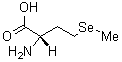
A cup of cooked barley provides 52.0% of the daily value for selenium, an important benefit since many Americans do not get enough selenium in their diets, yet this trace mineral is of fundamental importance to human health. Selenium is an essential component of several major metabolic pathways, including thyroid hormone metabolism, antioxidant defense systems, and immune function. Accumulated evidence from prospective studies, intervention trials and studies on animal models of cancer has suggested a strong inverse correlation between selenium intake and cancer incidence. Several mechanisms have been suggested to explain the cancer-preventive activities of selenium. Selenium has been shown to induce DNA repair and synthesis in damaged cells, to inhibit the proliferation of cancer cells, and to induce their apoptosis, the self-destruct sequence the body uses to eliminate worn out or abnormal cells.
In addition, selenium is incorporated at the active site of many proteins, including glutathione peroxidase, which is particularly important for cancer protection. One of the body's most powerful antioxidant enzymes, glutathione peroxidase is used in the liver to detoxify a wide range of potentially harmful molecules. When levels of glutathione peroxidase are too low, these toxic molecules are not disarmed and wreak havoc on any cells with which they come in contact, damaging their cellular DNA and promoting the development of cancer cells.
Not only does selenium play a critical role in cancer prevention as a cofactor of glutathione peroxidase, selenium also works with vitamin E in numerous other vital antioxidant systems throughout the body. These powerful antioxidant actions make selenium helpful for the prevention not only of cancer, but also of heart disease, and for decreasing the symptoms of asthma and arthritis.
Research reported at the American Institute for Cancer Research (AICR) International Conference on Food, Nutrition and Cancer, by Rui Hai Liu, M.D., Ph.D., and his colleagues at Cornell University shows that whole grains, such as barley, contain many powerful phytonutrients whose activity has gone unrecognized because research methods have overlooked them.
Despite the fact that for years researchers have been measuring the antioxidant power of a wide array of phytonutrients, they have typically measured only the "free" forms of these substances, which dissolve quickly and are immediately absorbed into the bloodstream. They have not looked at the "bound" forms, which are attached to the walls of plant cells and must be released by intestinal bacteria during digestion before they can be absorbed.
Phenolics, powerful antioxidants that work in multiple ways to prevent disease, are one major class of phytonutrients that have been widely studied. Included in this broad category are such compounds as quercetin, curcumin, ellagic acid, catechins, and many others that appear frequently in the health news.
When Dr. Liu and his colleagues measured the relative amounts of phenolics, and whether they were present in bound or free form, in common fruits and vegetables like apples, red grapes, broccoli and spinach, they found that phenolics in the "free" form averaged 76% of the total number of phenolics in these foods. In whole grains, however, "free" phenolics accounted for less than 1% of the total, while the remaining 99% were in "bound" form.
In his presentation, Dr. Liu explained that because researchers have examined whole grains with the same process used to measure antioxidants in vegetables and fruits-looking for their content of "free" phenolics"-the amount and activity of antioxidants in whole grains has been vastly underestimated.
Despite the differences in fruits', vegetables' and whole grains' content of "free" and "bound" phenolics, the total antioxidant activity in all three types of whole foods is similar, according to Dr. Liu's research. His team measured the antioxidant activity of various foods, assigning each a rating based on a formula (micromoles of vitamin C equivalent per gram). Broccoli and spinach measured 80 and 81, respectively; apple and banana measured 98 and 65; and of the whole grains tested, corn measured 181, whole wheat 77, oats 75, and brown rice 56.
Dr. Liu's findings may help explain why studies have shown that populations eating diets high in fiber-rich whole grains consistently have lower risk for colon cancer, yet short-term clinical trials that have focused on fiber alone in lowering colon cancer risk, often to the point of giving subjects isolated fiber supplements, yield inconsistent results. The explanation is most likely that these studies have not taken into account the interactive effects of all the nutrients in whole grains-not just their fiber, but also their many phytonutrients.
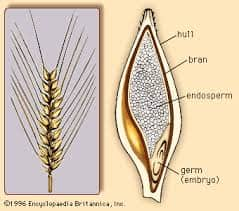
As far as whole grains are concerned, Dr. Liu believes that the key to their powerful cancer-fighting potential is precisely their wholeness. A grain of whole wheat consists of three parts-its endosperm (starch), bran and germ. When wheat-or any whole grain-is refined, its bran and germ are removed. Although these two parts make up only 15-17% of the grain's weight, they contain 83% of its phenolics. Dr. Liu says his recent findings on the antioxidant content of whole grains reinforce the message that a variety of foods should be eaten good health. "Different plant foods have different phytochemicals," he said. "These substances go to different organs, tissues and cells, where they perform different functions. What your body needs to ward off disease is this synergistic effect - this teamwork - that is produced by eating a wide variety of plant foods, including whole grains."
Lignans Protect against Cancers and Heart Disease
One type of phytonutrient especially abundant in whole grains such as barley are plant lignans, which are converted by friendly flora in our intestines into mammalian lignans, including one called enterolactone that is thought to protect against breast and other hormone-dependent cancers as well as heart disease. In addition to whole grains, nuts, seeds and berries are rich sources of plant lignans, and vegetables, fruits, and beverages such as coffee, tea and wine also contain some. When blood levels of enterolactone were measured in over 800 postmenopausal women in a Danish study published in the Journal of Nutrition, women eating the most whole grains were found to have significantly higher blood levels of this protective lignan. Women who ate more cabbage and leafy vegetables also had higher enterolactone levels.
Taken From the research of wholefoods