Myopathy
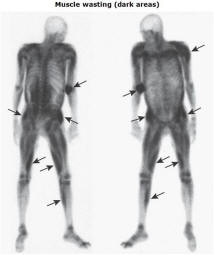
Hello! What is Myopathy? The myopathies are neuromuscular disorders in which the primary symptom is muscle weakness due to dysfunction of muscle fiber. Other symptoms of myopathy can include include muscle cramps, stiffness, and spasm. Myopathies can be inherited (such as the muscular dystrophies) or acquired (such as common muscle cramps). Myopathies are grouped as follows:
congenital myopathieslls; skeletal and facial abnormalities are occasionally evident at birth
muscular dystrophies: characterized by progressive weakness in voluntary muscles; sometimes evident at birth
mitochondrial myopathies: caused by genetic abnormalities in mitochondria, cellular structures that control energy; include Kearns-Sayre syndrome, MELAS and MERRF
glycogen storage diseases of muscle: caused by mutations in genes controlling enzymes that metabolize glycogen and glucose (blood sugar); include Pompe's, Andersen's and Cori's diseases
myoglobinurias: caused by disorders in the metabolism of a fuel (myoglobin) necessary for muscle work; include McArdle, Tarui, and DiMauro diseases
dermatomyositis: an inflammatory myopathy of skin and muscle
myositis ossificans: characterized by bone growing in muscle tissue
familial periodic paralysis: characterized by episodes of weakness in the arms and legs
polymyositis, inclusion body myositis, and related myopathies: inflammatory myopathies of skeletal muscle
neuromyotonia: characterized by alternating episodes of twitching and stiffness; and
stiff-person syndrome: characterized by episodes of rigidity and reflex spasms
common muscle cramps and stiffness, and
tetany: characterized by prolonged spasms of the arms and legs
Is there any treatment?
Treatments for the myopathies depend on the disease or condition and specific causes. Supportive and symptomatic treatment may be the only treatment available or necessary for some disorders. Treatment for other disorders may include drug therapy, such as immunosuppressives, physical therapy, bracing to support weakened muscles, and surgery.
It is best to use Omega-3 at least 3grams daily. Use vitamin -D 5000 units daily. IVIg is a treatment for many myopathyies. See the diet page for antiinflammatory diet. AUTOIMMUNE EPIDEMIC
Treatment of alcoholic poly neuropathy
want to learn about the brain and spinal cord
www.cidpusa.org/P/ivig.htm
Muscle physiology
Limb girdle
Body Building supplements
Sarcoid
Homocysteine Lowering diet
Natural Diet for diseases
Please proceed to page-2 of Help and FAQ
about Autoimmune Diseases