Thymus & Immunity
Please read our E-Book a guide to all autoimmune disordersThymus
The thymus gland lies in the upper part of the mediastinum behind the sternum and extends upwards into the root of the neck. It weighs about 10 to 15 g.(about half an ounce) at birth and begins to grow until the individual reaches puberty when it begins to atrophy. It's maximum weight is around 30 - 40g (around 1 to 1.5 ounces) by the age of 40 it has returned to it's weight at birth. The thymus consists of two lobes connected by areolar tissue. The lobes are enclosed in a fibrous capsule which dips into their substance dividing them into lobules that consist of an irregular branching framework of epithelial cells and lymphocytes.
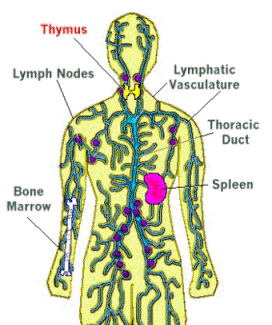
The thymus is a bilobed, greyish organ located in the thoracic cavity just below the neck. Curiously, when the thymus is removed from adult mammals, few effects are seen. However, when the thymus is removed at birth, dramatic effects are witnessed as will be explained later. The thymus develops from the endoderm. During its development many cells migrate towards it, most of which are lymphocytes. The thymus is divided into two distinct compartments, the outer cortex and the inner medulla. Both regions are densly populated with lymphocytes (or thymocytes while in the thymus). Most of the cortical lymphocytes are immature and unable to carry out immune functions. Mature immunocompetent cells are found in the medulla in greater numbers. The main function of the thymus is to develop immature T-cells into immunocompetent T-cells. This process begins with the production of pre-T cells in the bone marrow and their subsequent transport to the thymus via the blood. The pre-T cells are then taken into the cortex of the thymus. Here, a series of molecular events take place allowing the cells to recognize certain antigens. Some of the cells recognize self-components, and these are elmiminated by a process of negative selection. Those that fail the selection die and those that live proceed to the medulla and eventually into the blood stream where they act upon foreign agents in the body.
Read more about OUR links below
- Clay baths
- Steaming Sand Baths
- Coconut oil Benefits
- Deodorants cancer
- Toxic Lipstick
- Niacin deficiency
- Vitamin -D
- Vitamin-C
- Vitamin-E
- Spiritual illness
- Electronic stimulation
- Electronic cures
- Hyperacusis
- Spine
- Breast self exam
- ACV
- Healthy Oils
- Feet Home
- Beauty Tips for Women
- Celiac disease
- Right Fat Diet
- Apple juice
- Vinegar Benefits
- Supplements
- Cupping
- Alzheimers
- CMT neuropathy
- Phosphorous
- Energy drinks
- Say No TO FORCED vaccination
- LeRoy Franco
- Asofoendtida
- Peppers
- Bitter Gourd and ITP
- Longevity
- DHEA
- Curry Powder
- Water chestnut
- Beet Root anti cancer
- Green tea and cancer risk
- Dementia and exercise
- Sleep and stay fit
- avoid episiotomomy
- FLU SHOT NO
- Hyperacusis
- Spine
- Narcolepsy
- Eclampsia & autoimmune
- Multiple Medications
- Healthy Oils
- Sulfur baths
- Caly baths
- Steaming Sand Baths
- Soccer Player & Arthritis
- Body Building supplements
- Athlete gets GBS
- Chromium in Health
- Colostrum